
What checklist will save you time when evaluating Champagne Gold rhinestone suppliers? Key takeaways list the inspection points you should run through before you commit to stock.
- Key takeaways: inspect faceting and mirror backs, verify mixed-shape counts, confirm packaging and included tools, clarify MOQ and return terms, and set clear defect thresholds.
Why faceting and finish top the list?
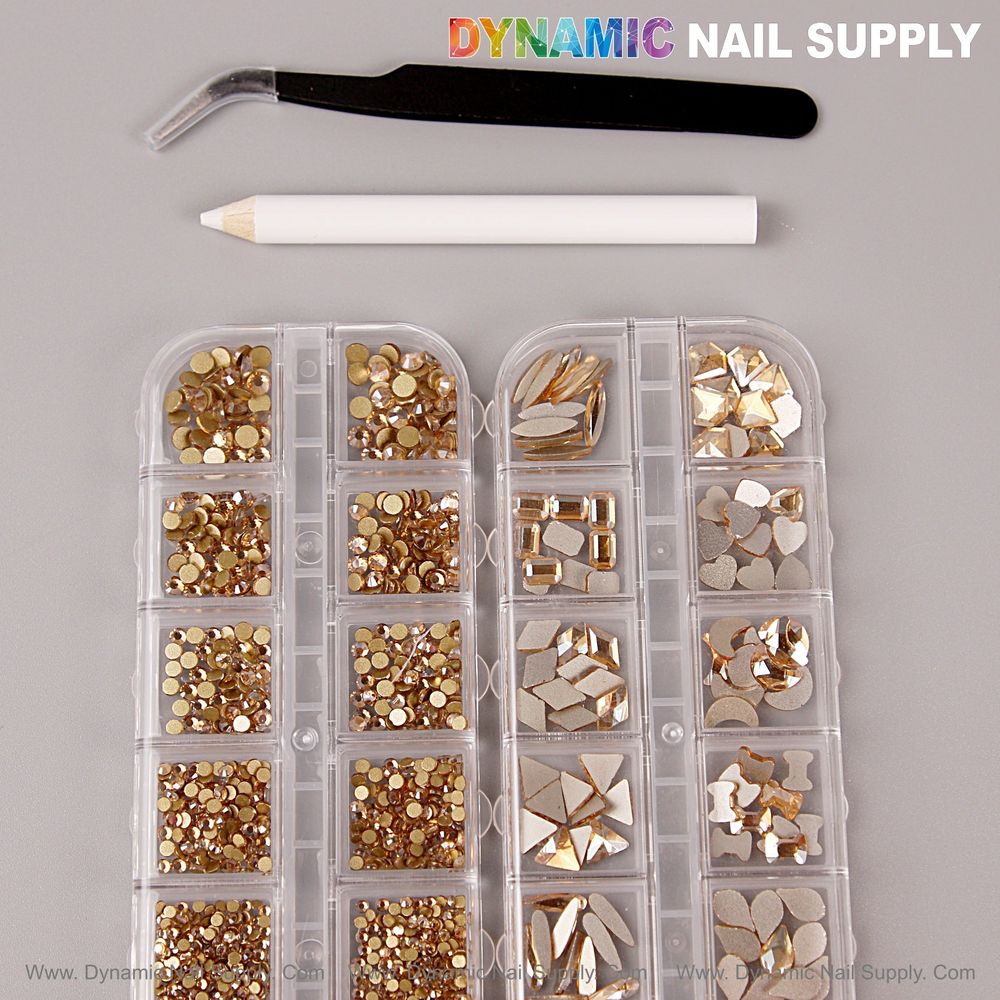
Why should you insist on close visual inspection of facets and finishes? Because the visual performance of Champagne Gold faceted gems determines perceived quality in the salon. What do you check? Look for consistent cut angles on faceted pieces, a bright mirror-like metallic flat back on gold-backed rounds, and even champagne tone across the set. What causes returns? Off-angle facets and dull finishes create uneven sparkle and client complaints. When you receive samples, hold them under warm salon lighting and view at multiple angles to confirm brilliance and consistent mirror backing.
What to inspect next: mixed shapes, sizes and counts?
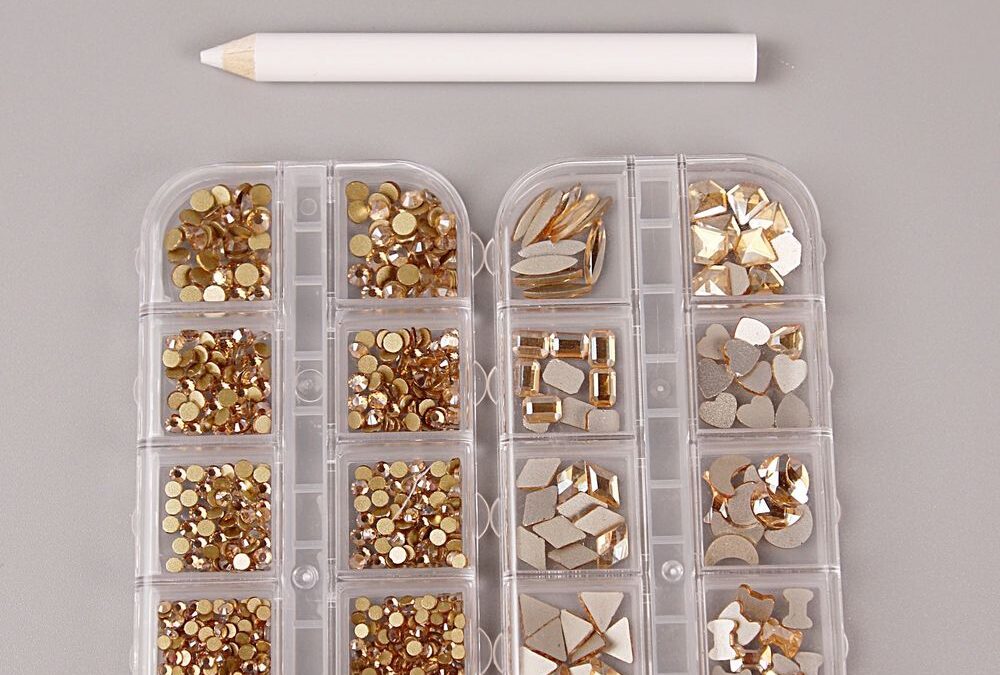
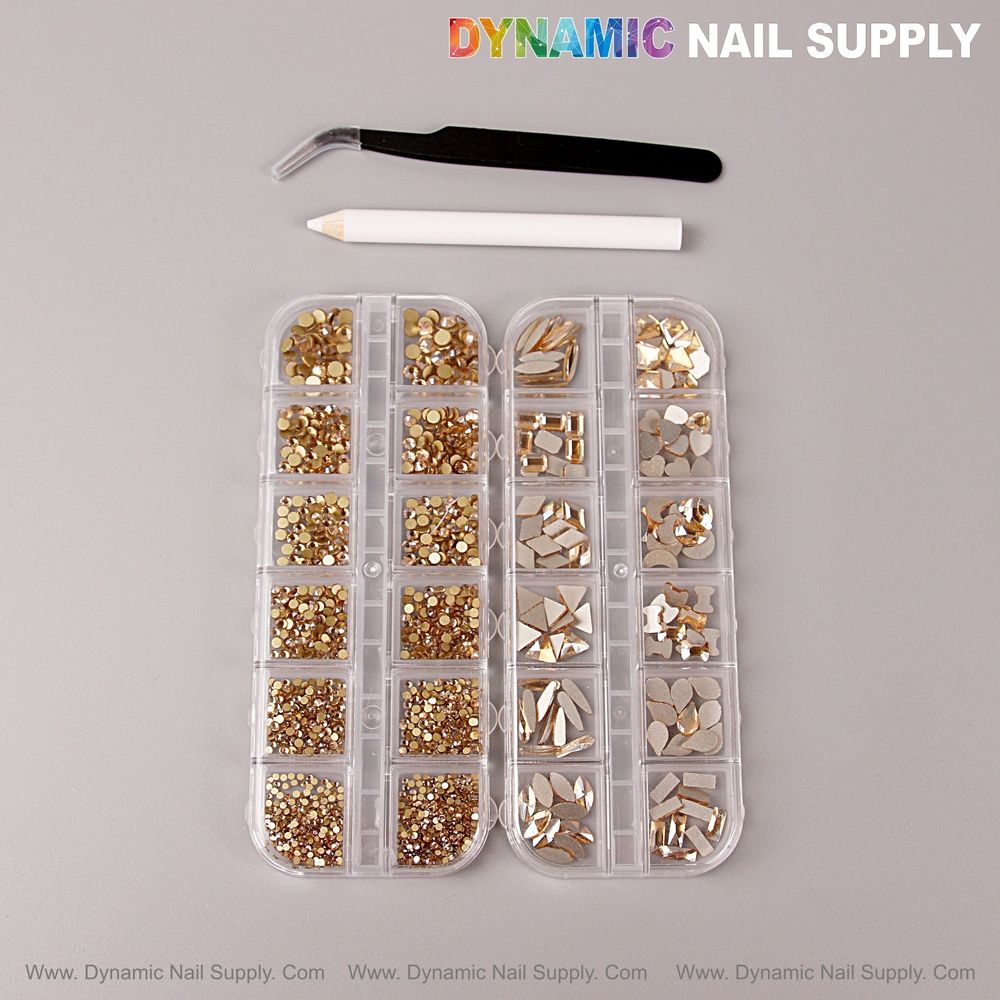
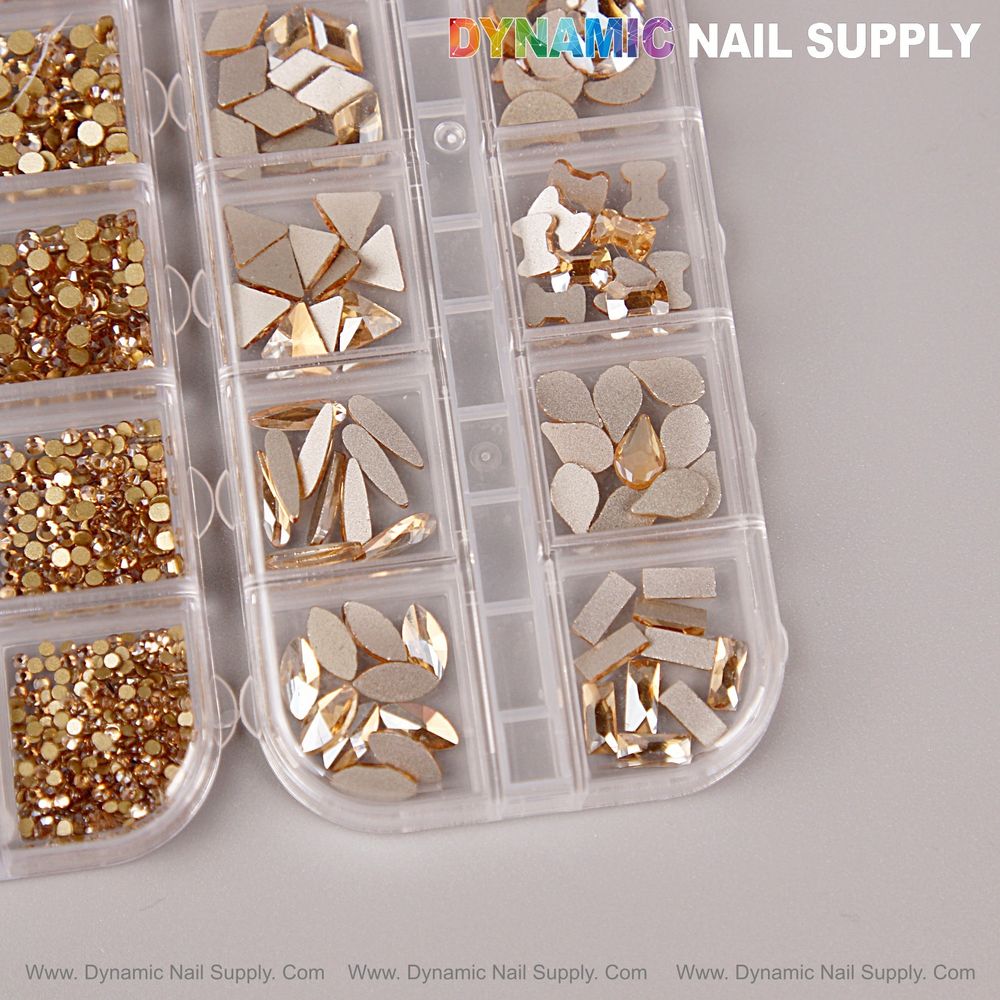
Why does mixed-shape accuracy matter more than overall quantity? Because you stage designs by shape and size—missing hearts or marquise pieces breaks your planned layouts. What to verify? Count the six round size ranges and the twelve unique shapes to match your inventory needs. When you spot variations, note whether backs are metallic gold or matte silver; the photo of this Champagne Gold multi-shape rhinestone set shows a mix of metallic gold flat backs and some matte silver-backed shapes, and that pairing affects placement and contrast on neutral gels. What do you do if counts vary? Set acceptable tolerance levels with the supplier and require batch documentation for each shipment.
When packaging, tools and organization matter?
Why prioritize packaging in supplier selection? Because organized delivery reduces handling time and loss. What should you expect in the box? Clear multi-compartment plastic cases and basic placement tools—precision tweezers and a wax picker—are standard for salon-ready kits. When tooling differs, ask whether tweezers match the finish and grip you prefer; the image shows black tweezers and a white wax pick included, which helps immediate use. What’s the risk of poor packaging? Loose mixed shapes increase breakage and sorting time during appointments.
Why negotiate minimums and defect thresholds early?
Why make MOQ negotiation a priority? Because salon inventory must balance variety and cash flow. What negotiation points preserve margins? Ask for tiered pricing by order volume, trial-case pricing at retail-like amounts, and a defined defect allowance per batch. When should you push for flexible MOQs? If you run seasonal collections or limited accent-nail promos, secure smaller trial lots first. What counts as a defect? Define acceptable rates for chipped facets, incorrect backs, and missing shapes before you accept full pallets.
What sample inspections must include?
Why require a physical sample before any large order? Because photos can’t show tiny backing imperfections or facet symmetry. What specific checks should you make on samples? Inspect facet uniformity, confirm mirror-like metallic gold backs on round stones, test adhesion methods on one or two pieces, and check how matte silver-backed shapes read against champagne faceting. When testing adhesion, follow salon protocols: use the adhesive you plan to stock (not a substitute) and document wear after a normal service timeline.
When quality control and returns policy save your schedule?
Why does a clear returns policy keep technicians productive? Because you need reproducible results between shipments. What contractual terms reduce downtime? Set inspection windows on delivery, require photographic batch records, and agree on credit or replacement terms when defect thresholds are exceeded. When a batch fails your inspection, reject promptly and document the issue to support faster remediation.
What safety and handling notes should you include?
Why include safety instructions in your supplier vetting? Because these kits contain small parts. What guidance is sensible? Require the supplier to note small-part hazards and to pack tools and gems separately; keep all items away from children under three in the salon. When training staff, emphasize careful placement and storage to avoid loss and client incidents.
For a practical reference product during your vetting process, review this Champagne Gold multi-shape rhinestone set as an example of the palette and packaging to expect: https://dynamicnailsupply.com/products/champagne-gold-multi-shape-size-nail-crystal-gem-rhinestone-set-flat-back-with-kit-mixed-round-and-different-shapes-1
Final verdict: if you want reliable, salon-grade Champagne Gold rhinestones, rank faceting and finish first, mixed-shape accuracy second, packaging and included tools third, and MOQ/returns negotiation fourth. Insist on physical samples, set clear defect tolerances, and require organized storage solutions so you keep appointments on time and clients returning.